
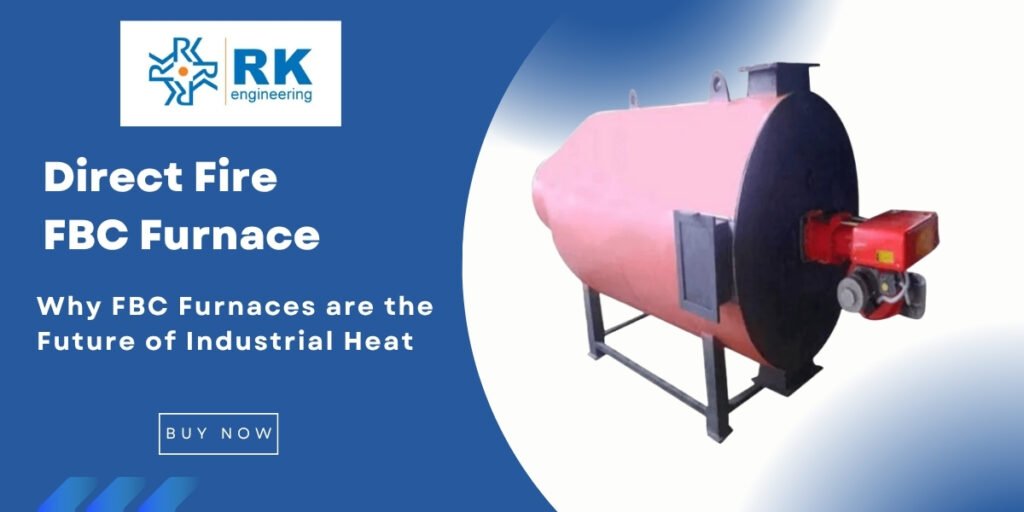
In an era of rising energy costs, traditional furnaces that rely on expensive fuels are becoming a liability. The Direct Fire FBC Furnace (Fluidized Bed Combustion) has emerged as the most reliable solution for manufacturers who need high-temperature, cost-effective heat using solid fuels like coal, rice husk, or other biomass.
The “magic” of FBC technology lies in the state of fluidization. By suspending solid fuel particles in an upward-flowing stream of air, you create a “boiling” effect that ensures near-perfect combustion and uniform heat transfer.
Send Inquiry
Fill the form and our team will contact you shortly.
1. Mastering the Fluidization Process
The key to maintaining furnace efficiency is the velocity of the air passing through the bed.
The Problem: If the fluidization velocity is too low, you get dead zones in the furnace, leading to clinker formation. If the velocity is too high, you lose fuel efficiency through “carry-over” (unburnt fuel exiting the furnace).
The Fix: Regularly monitor your forced draft (FD) fan performance. A balanced air-to-fuel ratio is essential for maintaining a stable fluidized bed. If your furnace is frequently forming clinkers, it’s a clear sign that your air distribution grid is uneven or obstructed.
2. Utilizing Multi-Fuel Capability
One of the biggest advantages of an FBC furnace is its ability to handle “opportunity fuels.” Whether you are burning agro-waste, saw dust, or low-grade coal, the FBC design is far more forgiving than grate-fired systems.
Pro Tip: If you are switching between fuels, ensure your feeding system is calibrated. A uniform feed rate prevents temperature spikes that can damage the refractory lining of your drying chamber or the downstream Hot Air Generator.
3. Preventing Clinker Formation
Clinkers are the primary cause of downtime in FBC furnaces. They form when the bed temperature exceeds the ash fusion temperature of your fuel.
Temperature Control: Always operate within the “sweet spot” of the fuel’s combustion curve. If your furnace is running too hot, the ash will melt and fuse into rock-hard clinkers that block the air nozzles.
Bed Material Health: Regularly sieve and replenish your bed material (usually sand or silica). Over time, the bed material can degrade or become contaminated with slag, which reduces the heat-transfer efficiency to your Thermic Fluid Heater or drying circuit.
4. Integration with Your Drying Line
Your furnace is only as good as the system it feeds. An FBC furnace produces highly consistent heat, but that heat must be managed carefully as it enters your Spray Dryer or Spin Flash Dryer.
Pressure Management: Ensure the interface between the furnace and the drying chamber is airtight. If your Rotary Air Lock Valve is leaking, it will disrupt the pressure profile of the furnace, leading to erratic combustion and heat output.
Technical Support for Your Combustion System
Upgrading to an FBC furnace is a significant capital investment that pays for itself through drastic fuel savings. If you are struggling with high ash content, clinker build-up, or inconsistent thermal output, our engineering team can perform a complete combustion audit.
Explore our high-performance Direct Fire FBC Furnaces here—engineered for multi-fuel flexibility and low-maintenance operation.
Contact our team for a thermal load assessment. We can help you transition from expensive traditional fuel sources to efficient, biomass-based FBC combustion.
