
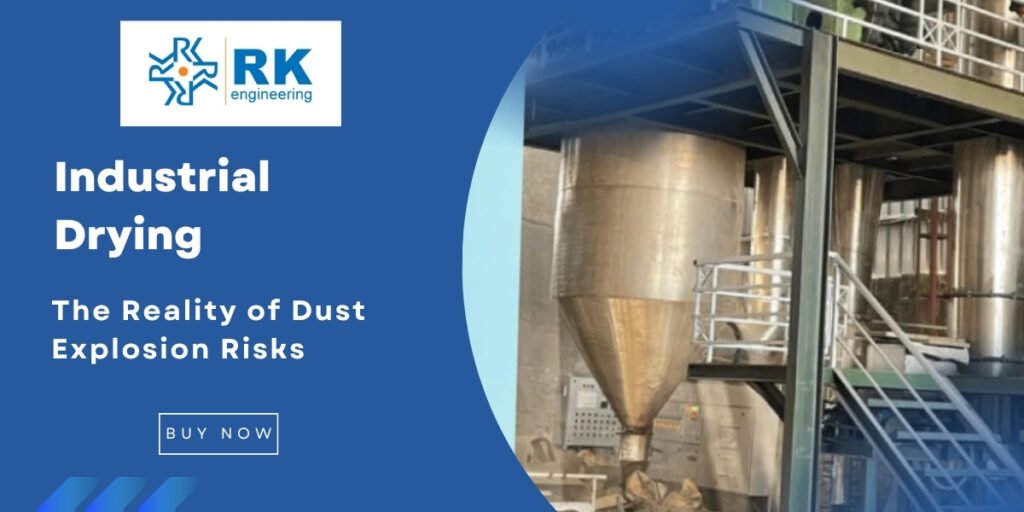
In the chemical and pigment manufacturing sectors, many materials are inherently combustible. When these fine powders are processed inside a Spray Dryer or a Spin Flash Dryer, the combination of heat, oxygen, and suspended dust creates a potential explosive atmosphere (ATEX).
As an industrial manufacturer, safety isn’t just a regulatory requirement—it is a moral and operational imperative. If you are drying sensitive materials, your system must be designed with “defense-in-depth” safety protocols.
Send Inquiry
Fill the form and our team will contact you shortly.
1. Essential Safety Design Features
Explosion Venting: Every drying chamber and cyclone must be equipped with rupture disks or explosion relief panels. These are designed to burst at a pre-calculated pressure, directing the force of an explosion away from personnel and critical equipment, preventing the vessel from rupturing.
Inert Gas Blanketing (Nitrogen Purging): For highly sensitive products, you should replace the oxygen-rich environment inside the dryer with nitrogen. This creates an inert atmosphere where combustion is physically impossible.
Grounding and Bonding: Dust particles can generate significant static electricity through friction. Ensure that every part of your system—including the Rotary Disc Atomizer and all ducting—is effectively bonded and grounded to prevent static discharge.
2. Operational Safety Interlocks
Your PLC Automation system should act as your primary safety gatekeeper.
Temperature Interlocks: The PLC should automatically shut down the Hot Air Generator or Direct Fire FBC Furnace if the inlet or outlet temperatures exceed safe limits for your specific material.
Flow Monitoring: If the airflow drops, the heat source must cut off immediately. Without adequate air, dust can accumulate and heat up to its auto-ignition temperature.
Valve Integrity: A leaking Rotary Air Lock Valve isn’t just an efficiency problem; in an explosive atmosphere, it is a leak path for flame propagation. Maintaining tight tolerances in your airlock valves is essential to keeping the drying chamber isolated.
3. Maintenance for Safety
Safety protocols are useless if they are not maintained.
Regular Cleaning: Dust accumulation on surfaces (beams, ducts, roofs) is a major fire risk. Implement a strict “clean-as-you-go” policy.
Bearing Temperature Monitoring: Overheating bearings on your Thermic Fluid Heater circulation pumps or atomizer motors can act as an ignition source. Use infrared thermography to check bearing temperatures during your monthly inspections.
Engineering for Peace of Mind
Designing an explosive-resistant drying line requires specialized engineering. It is not just about the dryer itself; it is about the entire integrated system, from combustion to collection.
Explore our range of industrial drying solutions—we specialize in designing systems that meet stringent global safety standards, including ATEX-compliant configurations for hazardous materials.
Contact our safety engineering team for a site safety audit. We can assess your existing drying process and help you implement the necessary safety interlocks, explosion venting, and grounding protocols to protect your facility.
