
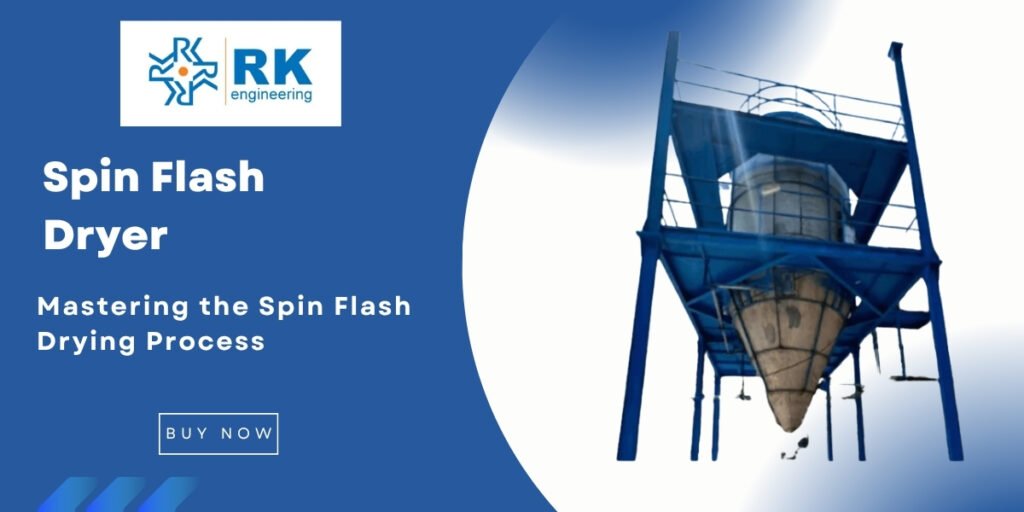
For industries processing filter cakes, pastes, and highly viscous slurries, the Spin Flash Dryer is the gold standard for rapid, high-efficiency moisture removal. Unlike traditional drying methods, the spin flash process uses a high-velocity, swirling air stream to break down material, allowing for near-instantaneous surface area exposure.
However, the very nature of these materials—often sticky or prone to caking—means that if the system isn’t perfectly tuned, you will face downtime due to wall deposits and inconsistent product quality.
Send Inquiry
Fill the form and our team will contact you shortly.
1. The Critical Role of the Agitator
The heart of your Spin Flash Dryer is the agitator located at the base of the drying chamber. Its job is to mechanically break the feed into smaller particles so the hot air can do its work.
The Problem: If your feed has varying moisture content, your agitator RPM might be set incorrectly. If the RPM is too low, the material remains in large, wet lumps, leading to “heavy” product that settles before it can be dried.
The Fix: Always match your agitator speed to the feed viscosity. For extremely sticky materials, ensure your agitator blades are not just rotating but effectively “shearing” the material. If you notice frequent blockages, it is often a sign that your agitator is not properly dispersing the feed at the point of entry.
2. Balancing Temperature and Airflow
The synergy between your Hot Air Generator and the drying chamber is vital. The air velocity must be high enough to transport the particles through the drying zone, but if the temperature is too high at the inlet, you risk “case hardening”—where the outside of the particle dries and seals the moisture inside.
Engineering Insight: Use a controlled multi-stage heating approach. If your material is heat-sensitive, ensure that your Thermic Fluid Heater circuit is delivering a consistent, precise temperature, preventing localized overheating in the chamber.
3. Preventing Wall Deposits
Wall build-up is the primary enemy of throughput. It starts with small particles sticking to the chamber wall, which then grow into “clinkers” that eventually break off and contaminate your final product.
Moisture Management: Ensure the dwell time in the drying zone is optimized. If the material stays in the zone too long because of poor airflow, it will become sticky again.
Discharge Integrity: The final stage of the process—the separation and discharge—must be perfectly sealed. If your Rotary Air Lock Valve has even a small air leak, it disrupts the cyclone’s pressure balance, causing the material to swirl back up instead of exiting, leading to rapid wall build-up.
4. When to Consider an Upgrade
If you find yourself constantly adjusting the system to keep up with throughput, your current dryer might be undersized for your material’s specific heat-load capacity. A modern spin flash unit should be able to handle wide fluctuations in feed moisture without requiring a manual reset of the entire process line.
Explore our high-efficiency Spin Flash Dryers here—designed with precision agitators and high-velocity drying chambers to handle the stickiest industrial cakes with minimal maintenance.
Contact our technical team for a process audit if you are experiencing recurring wall deposits or inconsistent final moisture levels.
