
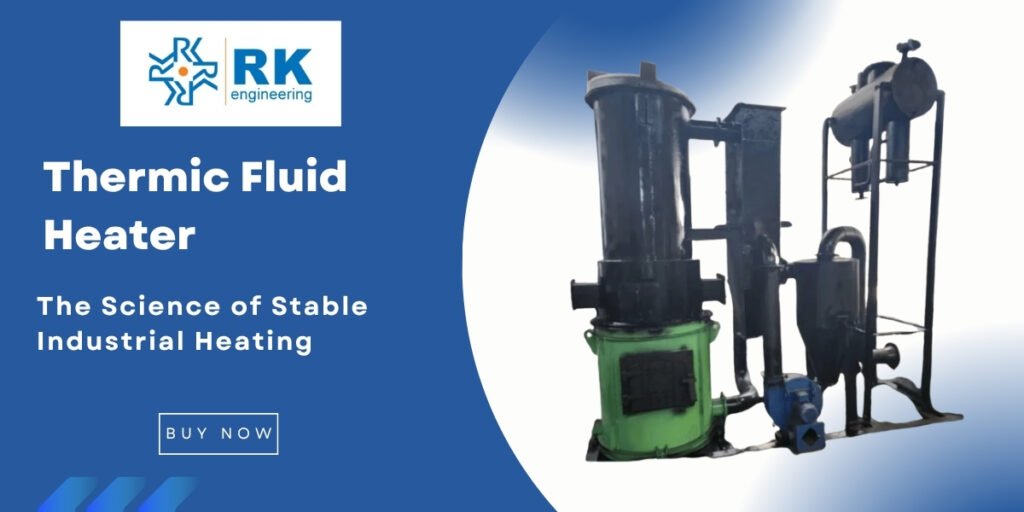
In high-precision manufacturing—such as chemical processing, textile heat setting, or polymer heating—the Thermic Fluid Heater (TFH) is the backbone of the process. Unlike steam boilers that operate under high pressure, a TFH provides high-temperature heat at low pressure, making it a safer and more efficient choice for many industrial applications.
However, the “Achilles’ heel” of any thermal oil system is oil degradation. If the oil breaks down, it creates carbon sludge, which coats the internal coils, acts as an insulator, and eventually leads to heater tube failure.
Send Inquiry
Fill the form and our team will contact you shortly.
1. Understanding Thermal Cracking
Thermal oil degradation primarily happens due to two reasons: Oxidation and Thermal Cracking.
Oxidation: This occurs when the hot oil comes into contact with air (usually in the expansion tank). This turns the oil acidic and thick, creating sludge.
Thermal Cracking: This happens when the oil is heated beyond its “film temperature” limit. Even if your bulk oil temperature is within range, if the oil near the coil surface gets too hot, the molecules “crack,” forming carbon deposits inside the tubes.
2. Proactive Maintenance Checklist
To extend the life of your thermal oil and protect your heating coils, follow these steps:
Monitor Expansion Tank Temperature: The expansion tank should be the coolest part of the system. If it is getting too hot, you have an oxidation problem. Ensure the tank is properly vented and, if necessary, use a “cold seal” or inert gas (nitrogen) blanket.
Maintain Flow Velocity: Your circulation pump must be sized correctly. If the flow velocity inside the heater tubes is too low, the oil spends too much time against the hot coil surface, leading to overheating.
Regular Oil Analysis: Don’t guess—test. Conduct a biannual oil analysis to check for flash point changes, viscosity shifts, and acid numbers. This will tell you exactly when your oil needs replacement before it damages your equipment.
3. System Integration for Maximum Life
A well-designed heating circuit doesn’t just include a heater; it includes proper filtration and air management.
Filtering: Use a high-quality strainer to catch any particulate matter before it reaches the pump or the heater coils.
System Balancing: Ensure your downstream equipment (like heat exchangers in a Spray Dryer or Spin Flash Dryer) are correctly sized. An undersized exchanger will force your heater to work harder and increase the risk of overheating the oil.
4. When to Upgrade Your Heater
If you are constantly facing high maintenance costs or if your heater fails to maintain a steady temperature, your unit might be outdated. Modern heaters are designed with advanced coil geometry and optimized combustion chambers that prevent “hot spots,” significantly reducing the risk of thermal cracking.
Explore our high-efficiency Thermic Fluid Heaters here—engineered for uniform heat distribution and long-term oil stability.
Contact our engineering team for a system audit. We can help you troubleshoot your current setup, perform a thermal load calculation, or provide a custom upgrade plan to suit your production volume.
